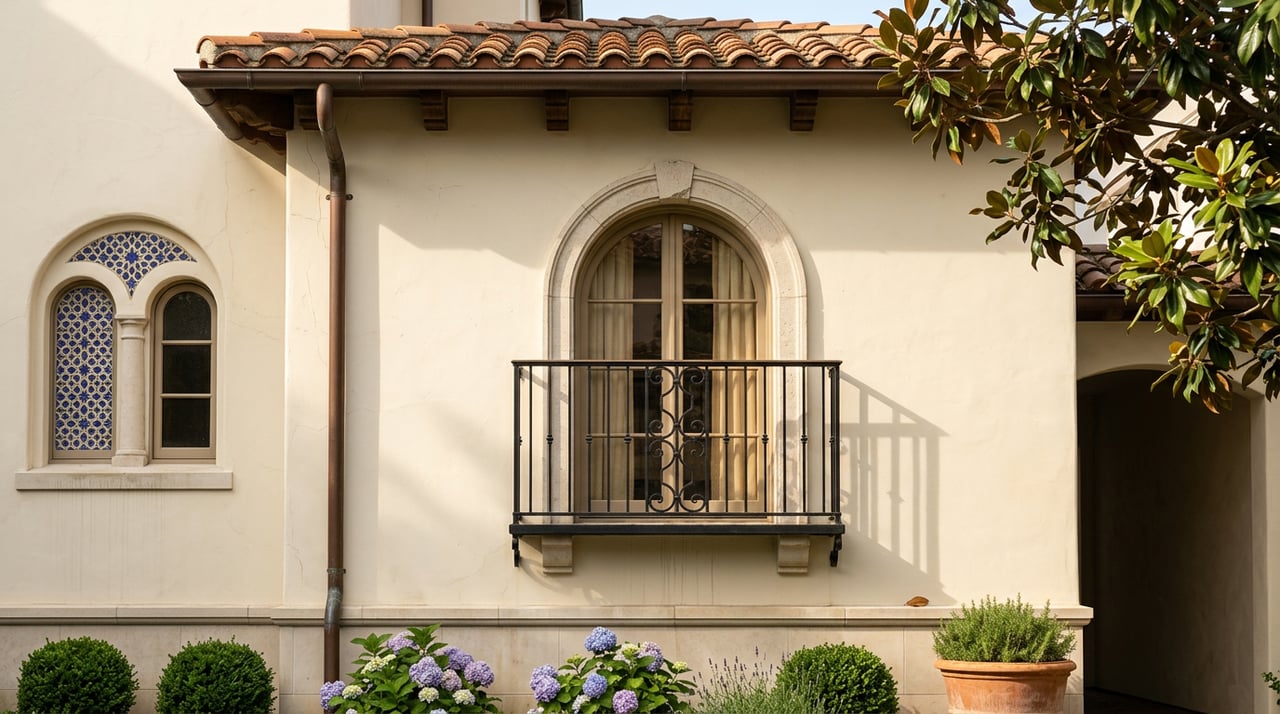
If you've spent a weekend touring Plaza condos, you already know the sales pitch by heart. Spanish tile, fountains, a streetcar stop, coffee walks to Mill Creek Park, dinner at Gram & Dun, a five-minute drive to downtown. The listing photos do most of the work, and the trailing-twelve-month median around $750,000 gives buyers a comfortable frame for what a piece of that lifestyle costs.
That frame is about to change, and most of the buyers I'm walking through Townsend Place and Parkway Towers this summer don't have the new one yet. On May 21, 2026, the Kansas City Council unanimously approved a redevelopment master plan for the Country Club Plaza that permits buildings up to 178 feet and adds roughly 1,100 multifamily housing units to the district. The condo you're evaluating today will be resold into a very different Plaza.
The walk-to-Plaza premium you're paying to own is about to be rented instead. The building you pick, and the HOA structure behind it, is what decides whether that matters.
The number that reframes the median
Start with what the district itself sold for. In June 2024, Gillon Property Group bought the Country Club Plaza for $175.6 million. A decade earlier, the previous owners paid $660 million for the same asset. Port KC's Jon Stephens has been public about what that gap represents, describing the Plaza as a depreciating asset that Kansas Citians have been slow to see clearly because the emotional brand is so strong.
Since the 2024 purchase, Gillon has appealed the county assessment aggressively enough to cut the Plaza's property tax bill by nearly 40 percent, pushed a $210 million tax-increment financing plan that redirects a majority of new sales tax growth back into district infrastructure for the next 23 years, and secured a property tax incentive framework tied to roughly $1.5 billion in planned projects that can effectively lock the baseline for three decades. The Beacon and KCUR walked through the mechanics in January 2026 if you want to read the deal structure directly, and the KCUR guide to the Plaza's financial deals is the cleanest primer.
None of this is bad for a Plaza condo owner in isolation. Restored sidewalks, better stormwater, the $1.4 million Wornall–Ward Parkway pedestrian bridge already rebuilt, new tile work on the medical building, wider walks and green space are all upside. But every one of those upgrades is being underwritten by a business plan that has to pencil at the density the council just authorized.
1,100 units is the supply story hiding under the median
Read the master plan the way an owner should. Height allowances up to 178 feet, roughly 1,100 new apartments, and a stated goal of a denser mixed-use district, all delivered by the same owner who just repriced the underlying land to a fraction of the prior basis. That is an enormous new rental supply landing inside the exact half-mile radius that Plaza condo values are priced against.
If you're buying a condo at Townsend Place, 4646 Broadway, Parkway Towers, Oak Hall, or one of the Nelle Peters-designed buildings on the Literary Block, the specific thing you're paying a premium for is the ability to walk out your door and be on the Plaza. In three to five years, an additional 1,100 households will be able to do that without buying anything. The Homes.com figure that 85 percent of current Plaza residents rent is not a demographic fact to note. It's the direction of travel.
That doesn't mean condo values collapse. It means the resale story shifts from "own a piece of the Plaza" toward "own the piece the new inventory can't replicate." Which buildings can't be replicated is the question that matters, and it's a building-by-building answer, not a neighborhood one.
What the HOA actually covers, and why it decides your resale
The single most common mistake I see Plaza condo buyers make is comparing two units on price per square foot without reading the two HOA declarations side by side. In this district the HOAs are effectively part of the price, and they diverge sharply.
| Building type | Typical monthly HOA | What it usually bundles | What you still pay separately |
|---|---|---|---|
| Full-service high-rise (Townsend Place, 4646 Broadway, Parkway Towers) | Around $1,000 and up | Concierge, fitness, garage parking, water, trash, exterior, common areas, reserves | Electric, interior, insurance rider |
| Mid-century tower (Oak Hall style) | Mid range | Nearly everything except electric, sometimes including guest suites rented nightly | Electric, interior |
| Boutique historic (Literary Block, smaller conversions) | Lower monthly, higher variance | Exterior, common areas, some utilities | Reserves risk, special assessments |
| West Plaza entry-level (Normandy Square, Plaza Hills tier) | Lower | Exterior, common areas | Utilities, amenity gaps |
Homes.com pegs typical Plaza high-rise HOA dues hovering around $1,000 a month, which is real money against a $750,000 median but is also doing real work. When the district around you is turning into a construction site for the next several years, an HOA that funds a 24/7 concierge, a private fitness center, a rooftop or interior amenity floor, and full building services is the thing that keeps your unit rentable and resellable through the disruption. A cheaper HOA on a boutique building can be the right answer, but only if you have read the reserve study and understand what the next special assessment looks like.
Ask for two documents before you write an offer on anything Plaza-side: the current HOA budget with reserve balance, and the minutes from the last twelve months of board meetings. If the minutes reference deferred exterior work, elevator modernization, or any conversation about the new zoning affecting sightlines and light, price that in.
The 95-day drag matters more when the district is under construction
Homes.com reports Plaza-area homes sell in an average of 95 days versus 58 nationally over the trailing twelve months. That gap is not new, and it isn't a red flag on its own. Plaza condos have always been a smaller buyer pool. The owner-occupant looking for a walkable, lock-and-leave two-bedroom under $800,000 is a specific person, and there are only so many of them in the metro at any given week.
What is new is that the next three to five years of resale activity happens inside an active redevelopment zone. Design work on the master plan begins now. Building heights climb. Streets get torn up on Gillon's schedule and the TIF's schedule, not yours. The buildings that hold value best through that period will be the ones with the strongest owner-occupied ratio, the cleanest reserves, and the amenity stack that gives a buyer a reason to sign during a season when the block is loud.
If you're thinking about buying and reselling inside a five-year window, the 95-day figure is the floor, not the average. If you're buying to hold for a decade or more and you like the density thesis, you're likely buying into a Plaza that has more restaurants, more residents on foot, and more reasons for that condo to trade well in 2032 than it has today.
How to price the walk-premium honestly this year
A few pieces of ground-level friction I'm walking clients through right now:
- The named local tenants coming online in 2026, including Vertice Italian from Summit Hospitality Group, J.H. & Sons menswear, Perch, Prize Home + Garden, and KCHouse for the FIFA World Cup, are the leading edge of the tenant mix Gillon promised. Vertice is the first locally owned restaurant announced under the new ownership, filling the Italian gap left when Brio closed in January 2025. That mix reads as a real correction from the national-chain drift of the last decade.
- The streetcar extension south past the Plaza toward UMKC materially widens the resale pool for east-side buildings like Oak Hall and the Literary Block. Buyers who wouldn't have considered the Plaza when it meant a car for every errand look at it differently now.
- The historic preservation guidelines built into the approval require new construction to honor the Spanish-revival vocabulary. That's meaningful protection for the district's visual identity, and it's also why the redevelopment will take longer and cost more than a generic infill project. Longer, in this context, is your problem as a seller and your opportunity as a long-term owner.
- Special assessments are the single biggest wild card in any Plaza high-rise. A building that hasn't done a major exterior or mechanical project in fifteen years is likely to do one during your ownership. Ask.
FAQ
Are Plaza condo values likely to fall because of the 1,100 new apartments? Not uniformly. Buildings with irreplaceable views, strong reserves, and full amenity stacks should hold. Buildings competing directly on "walkable and updated" with brand-new rental product will feel the most pressure on rent comps, which flows through to appraisal comps over time.
Does the 30-year property tax deal affect what I pay as a condo owner? The TIF and PILOT structures apply to the redevelopment parcels Gillon controls, not to individually owned condominium units. Your condo is assessed and taxed by Jackson County on its own merits. The district-level deal shapes the environment your unit sits inside, not your personal tax bill.
Is now a bad time to buy on the Plaza? It's a bad time to buy without reading the HOA docs and the reserve study. It's a reasonable time to buy the right building at the right basis if you plan to hold through the construction cycle.
If you're evaluating a specific Plaza condo this summer, the analysis above is exactly the kind of building-by-building read we do before writing an offer. Livin KC works these buildings weekly, we know which boards are functional, and we can pull the HOA documents and reserve studies alongside the listing before you decide. Reach out and let's look at your building the way an owner five years from now will look at it.