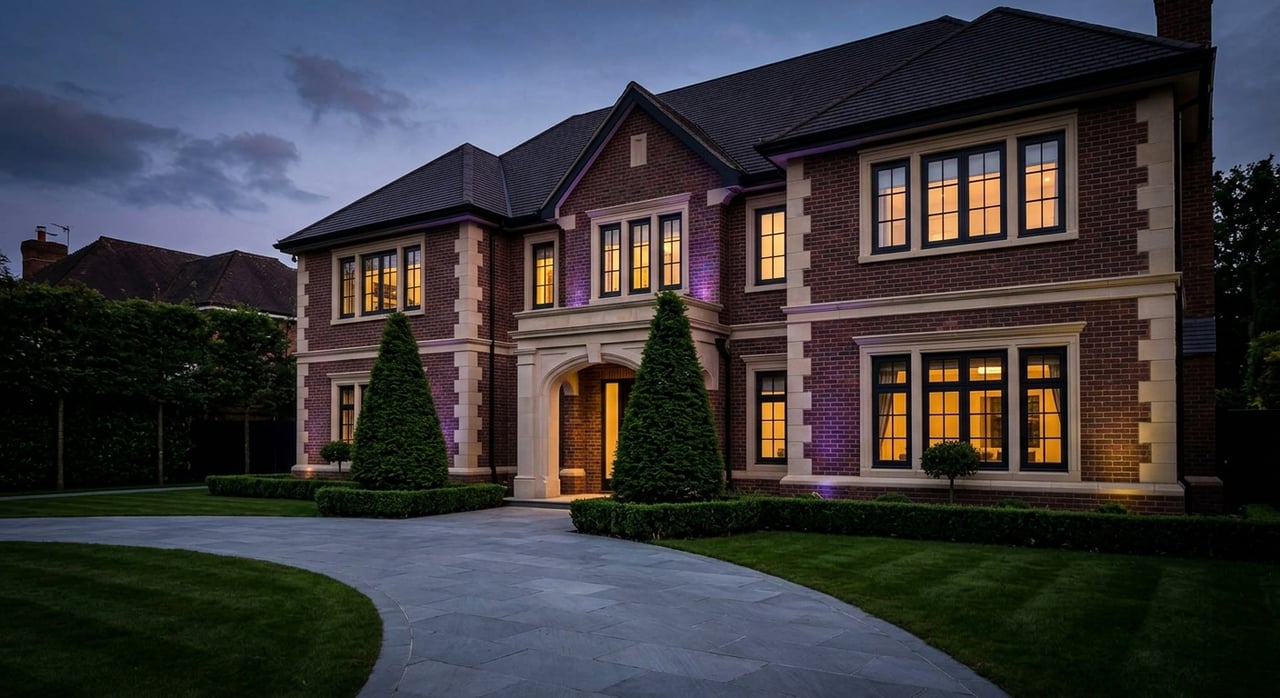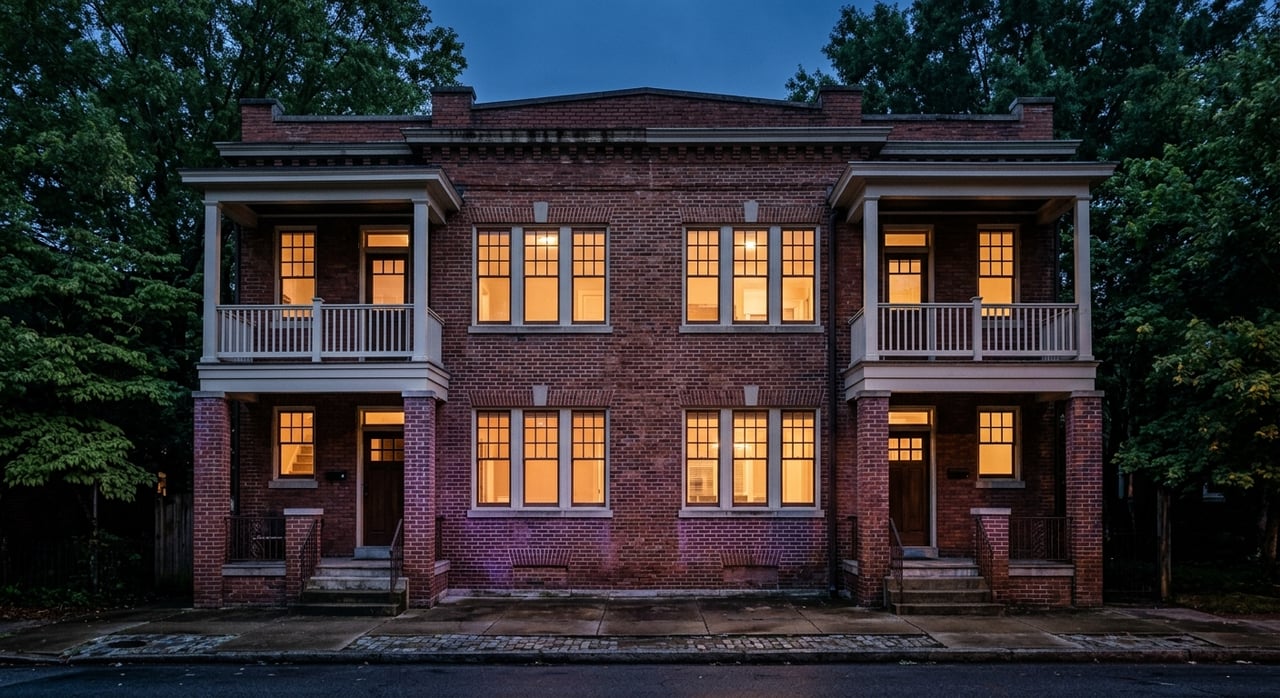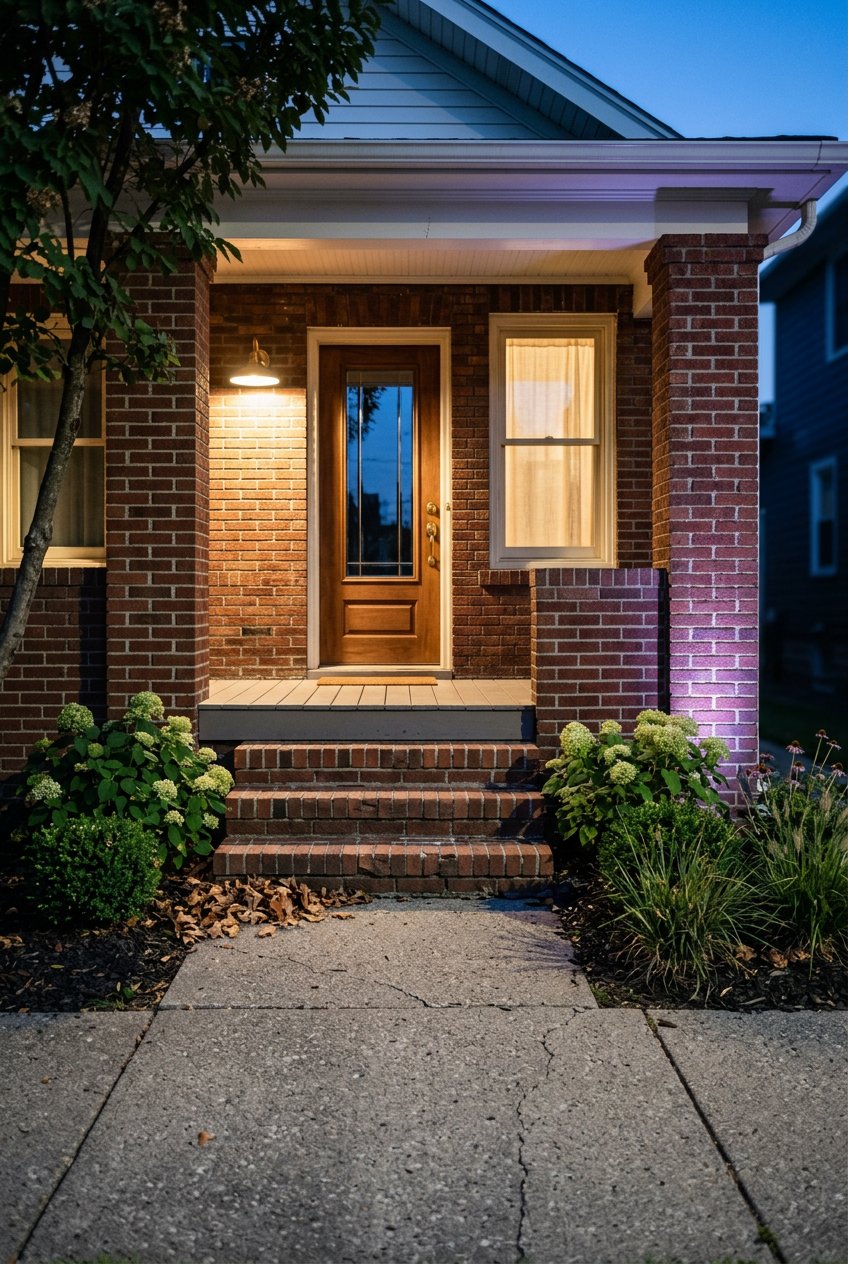
Two houses in Leawood can sit on the same street, carry the same asking price, and answer to completely different rulebooks. One might belong to an association founded before World War II with its own architectural committee. The other might pay dues to two separate boards at once. A third might have a Leawood mailing address while its actual building permits come from Overland Park. The city line tells you almost nothing about which of these you're buying into. The plat does.
That distinction rarely shows up on a listing sheet, and it matters most at two exact moments: when a seller wants to renovate before listing and assumes city rules are the only rules, and when a buyer is comparing two Leawood contracts and assumes the HOA line item means the same thing in both.
Old Leawood's Rulebook Predates the City's Own Zoning Code
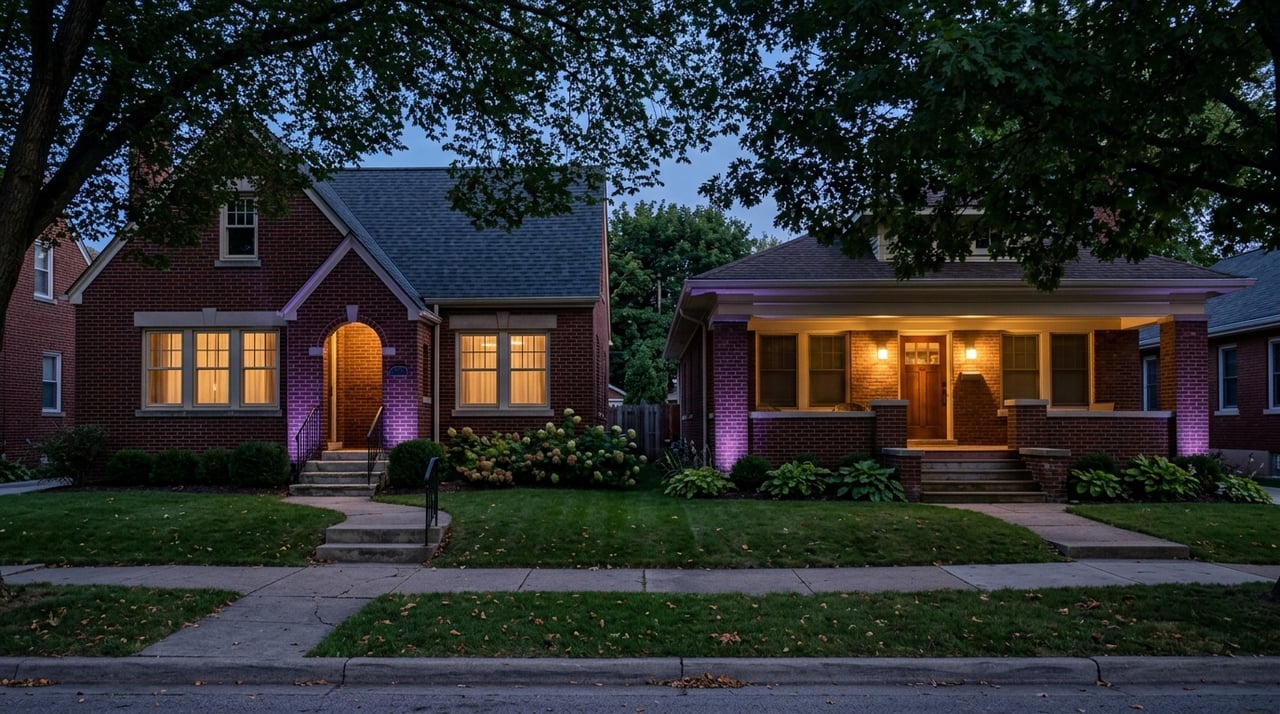
The Leawood Homes Association, known as the LHA, was created in 1938 by the Kroh Brothers, the developers who platted roughly 1,500 homes in what's still called Old Leawood, bounded by 95th Street on the south, Somerset Drive on the north, State Line Road on the east and Mission Road on the west. Annual dues fund trash, recycling and yard waste pickup, upkeep of the street trees, and maintenance of the association's 49 islands and monuments scattered through the neighborhood.
The part that catches sellers off guard is the Architectural Review Committee. Any exterior renovation, any addition, and any teardown followed by new construction requires the ARC's sign-off before work begins, not after. If you're planning a kitchen bump-out or a full rebuild ahead of a spring listing, that approval step happens before a city permit even enters the picture.
Old Leawood is the association most people picture when they hear "Leawood HOA." It's also just one of dozens. The city's own subdivision directory runs past forty named communities before it even finishes the letter L: Aimtree Manor, Berkshire, Bradford Place, Bristol Place, Buckingham Estates, Camden Woods, Carriage Crossing, Highlands of Leawood, Hunter's Ridge, King's Forest, and on. Each one operates independently, with its own board, its own bylaws, and its own answer to the same question.
Some Homes Pay Into Two Boards at Once
Berkshire shows how far the layering can go. The Berkshire Villas Homes Association covers 58 member households and set 2026 dues at $2,500 a year, covering lawn, shrub and ornamental tree care, snow removal, and yard light maintenance. Those same 58 households also belong to the parent Berkshire Homes Association, which totals 166 residents across the broader neighborhood and charges its own separate dues of $1,350 a year for trash removal, glass recycling, common area upkeep, and the pool, tennis courts and clubhouse.
Add it up and a Berkshire Villas resale buyer is underwriting $3,850 a year across two boards, two sets of bylaws, two meeting calendars, and two separate risks of a special assessment. A buyer who only asks "what's the HOA fee" and gets one number from a listing agent is getting half the picture, and the half that's missing is the one with its own reserve fund and its own vote on whether to raise dues next year.
The Subdivision Line Doesn't Always Match the City Line
Leawood Estates adds a different wrinkle. The neighborhood covers close to 1,500 homes on tree-lined streets, and it sits within both the City of Leawood and the City of Overland Park. The homes association's own guidance is direct about what that means in practice: the cities of Leawood and Overland Park issue the actual construction and building permits, while the association's Architectural Review Committee handles everything about exterior appearance separately from that municipal process.
So a resident on one block submits plans to Leawood's building department. A resident a few doors down, technically in Overland Park, submits to a different city entirely. The HOA newsletter looks the same for both of them. The pool schedule is the same. The permit counter is not.
Leawood Estates' own architectural guidelines recommend building in 21 days for a plan review, even though most turn around faster, because the association's process runs on its own timeline independent of whichever city's permit office a given lot answers to.
The City Keeps a List. It Doesn't Vouch for It.
If you're trying to shortcut all of this by checking with the City of Leawood directly, the city has a page for that: the HOA Public Info List. It's worth reading the fine print on it. The city states plainly that it does not check or warrant the accuracy of the information posted there, that no warranty is expressed or implied about its reliability, and that individuals should contact associations directly for current details. Each HOA maintains its own entry by submitting a contact form. Nobody at the city cross-checks it.
That's not a criticism of the city's process. It's a fact worth knowing before you treat that directory as a verified source during due diligence. The honest answer to "which HOA governs this address, and what are its current rules" is that the city's list is a starting point, not a confirmation.
What This Changes About Comparing Contracts
None of this shows up in a median price. It shows up in the closing costs, the pre-listing renovation timeline, and the dues line that either matches what a buyer expects or doesn't.
Fine schedules give a sense of what's enforceable and not just theoretical. In the Pavilions of Leawood, landscaping installed without the Architectural Review Committee's approval carries a $1,000 fine, and other covenant violations run $100. Those numbers come straight from that association's own restrictions document, and they're a reminder that ARC approval isn't a formality to skip if the timeline is tight.
Before writing an offer or setting a list price on a Leawood home, it's worth getting three specific things in hand rather than assuming they're standard: the current CC&Rs for the exact subdivision, not a summary from a few years back, since dues and rules change at annual meetings; confirmation of whether the property answers to one association or two; and, if there's renovation work planned before a sale, the architectural review process and expected turnaround for that specific HOA rather than the citywide reputation Leawood has for smooth permitting.
Frequently Asked Questions
Does every home in Leawood belong to an HOA? Leawood does not have one citywide association. Coverage comes from whichever subdivision-level HOA holds the covenants for that specific plat, and that varies block to block. Confirm status for the exact address rather than assuming based on a neighboring property.
Are HOA dues consistent across Leawood? No. Documented 2026 dues in this research ranged from $1,350 a year in the Berkshire Homes Association to $2,500 a year in the Berkshire Villas Homes Association, and some households pay into both at once. Other subdivisions set their own separate figures.
Where do I find out which HOA covers a specific Leawood address? The City of Leawood's HOA Public Info List is a reasonable starting point, but the city explicitly does not verify the entries. Confirming directly with the association, or through title work during a transaction, is the more reliable path.
Does an HOA's architectural review replace the city building permit? No. In subdivisions like Leawood Estates, the association's review covers exterior appearance while the applicable city, which can be Leawood or Overland Park depending on the lot, still issues the actual construction permit.
If you're comparing homes in Leawood and want the actual covenants, current dues, and architectural review timeline for a specific address before you write an offer or plan a renovation ahead of a listing, that's the kind of block-by-block homework the team at Livin KC does before a showing gets scheduled, not after a surprise turns up in an inspection.