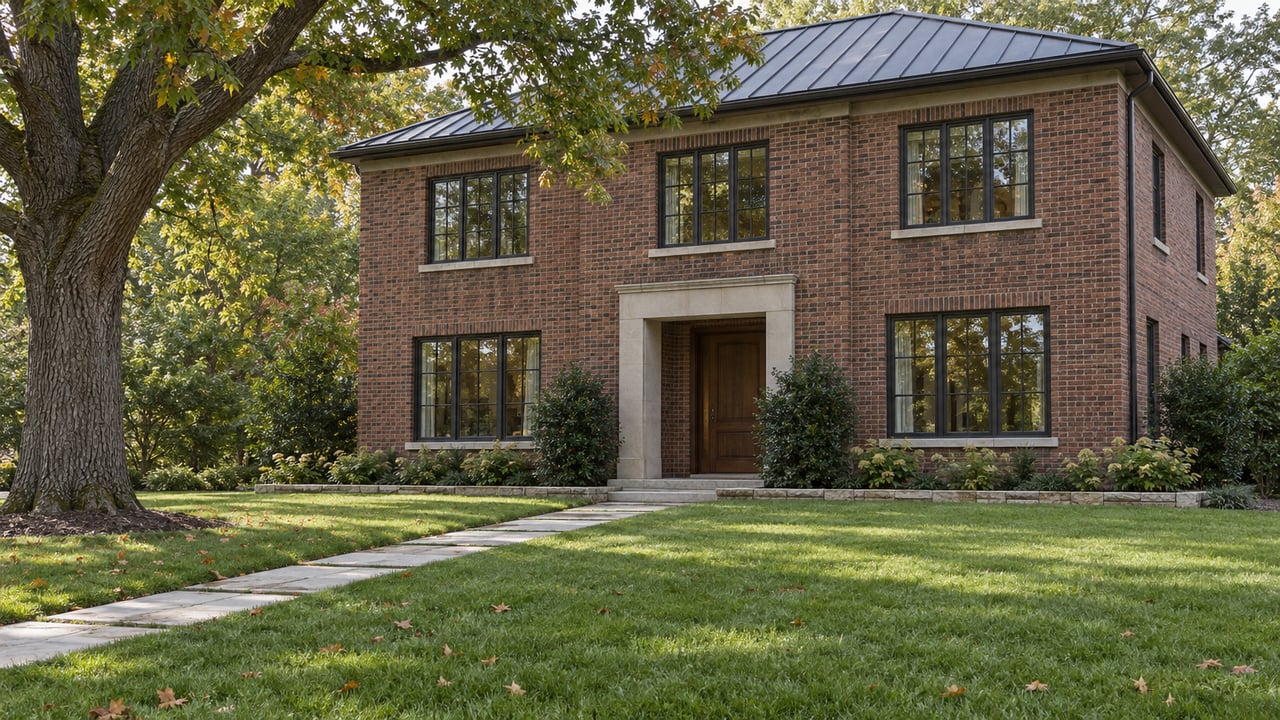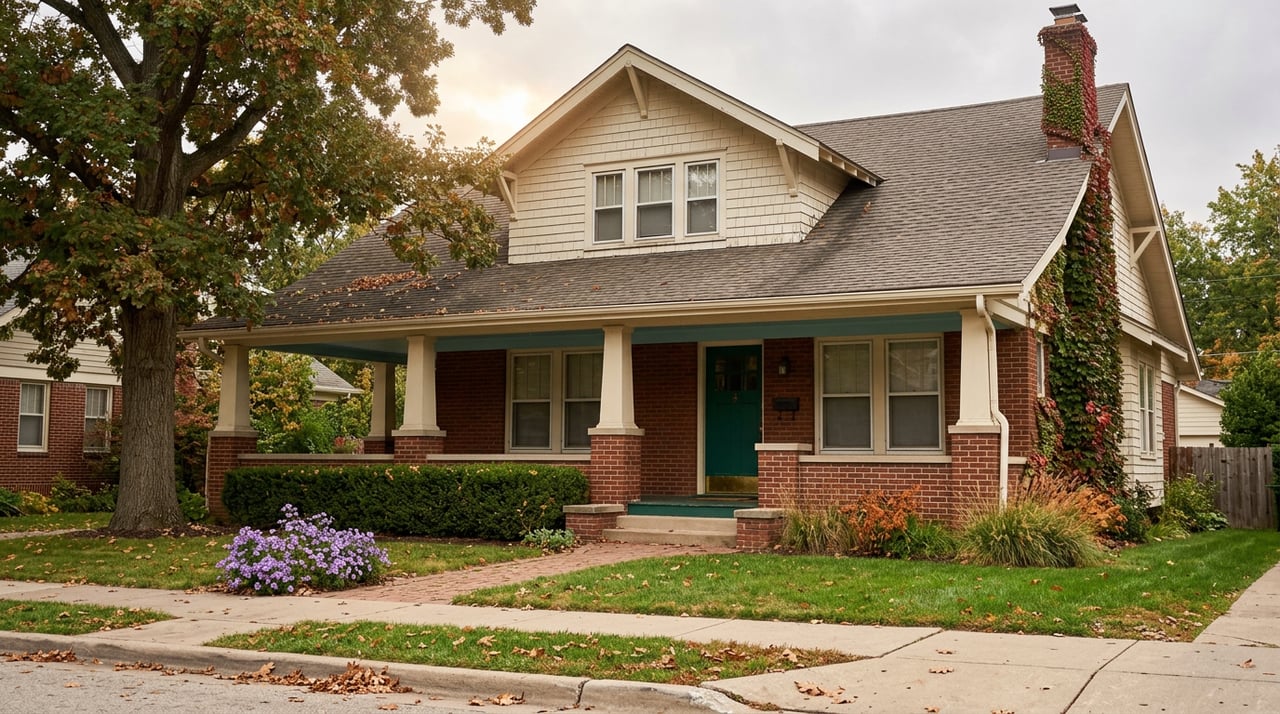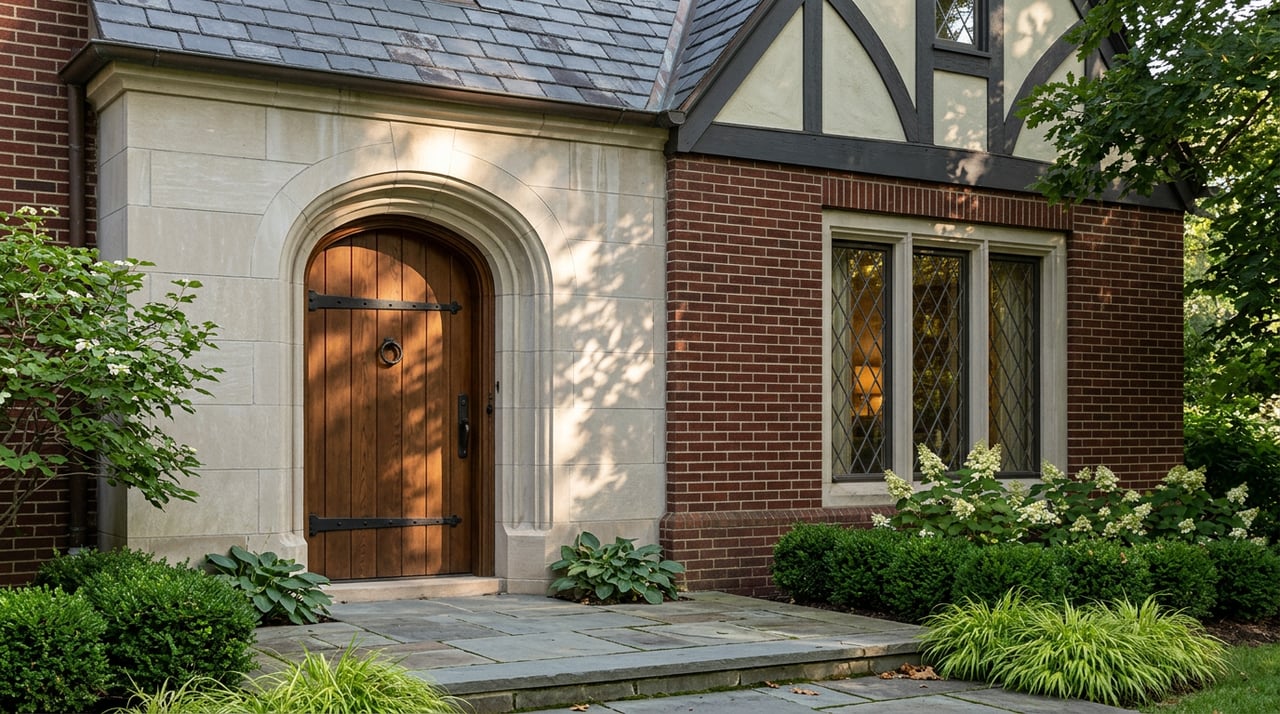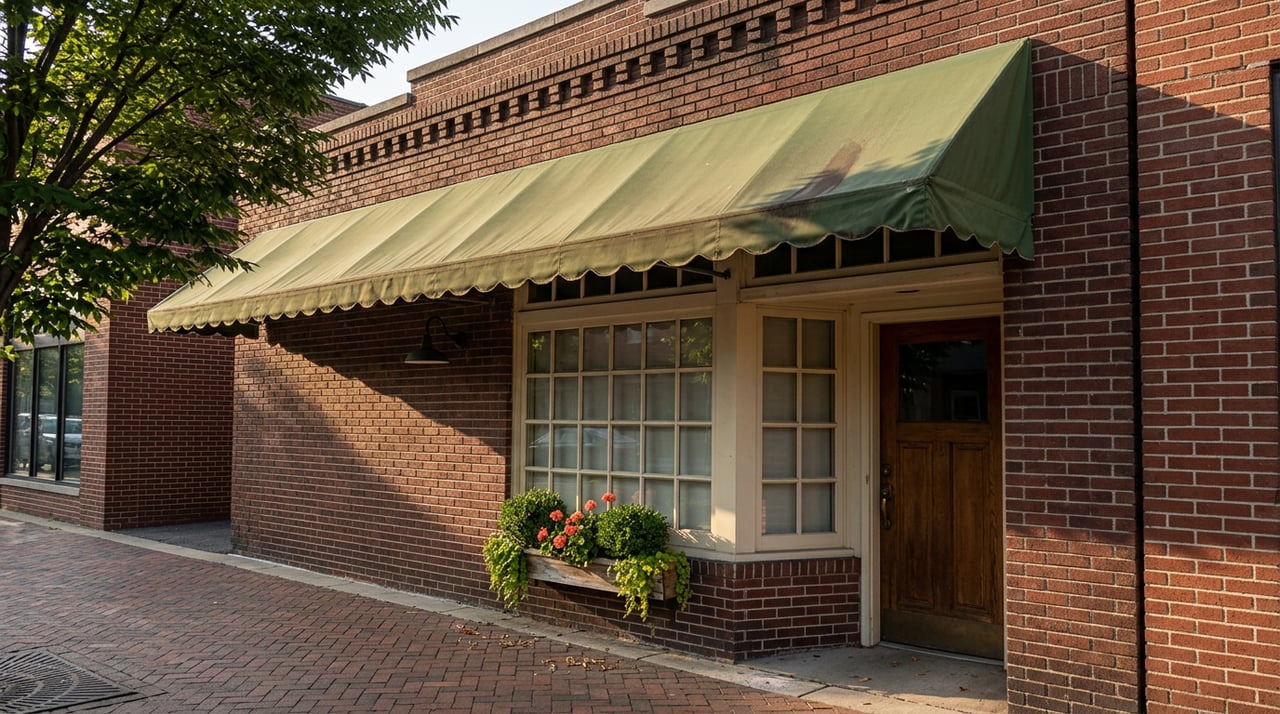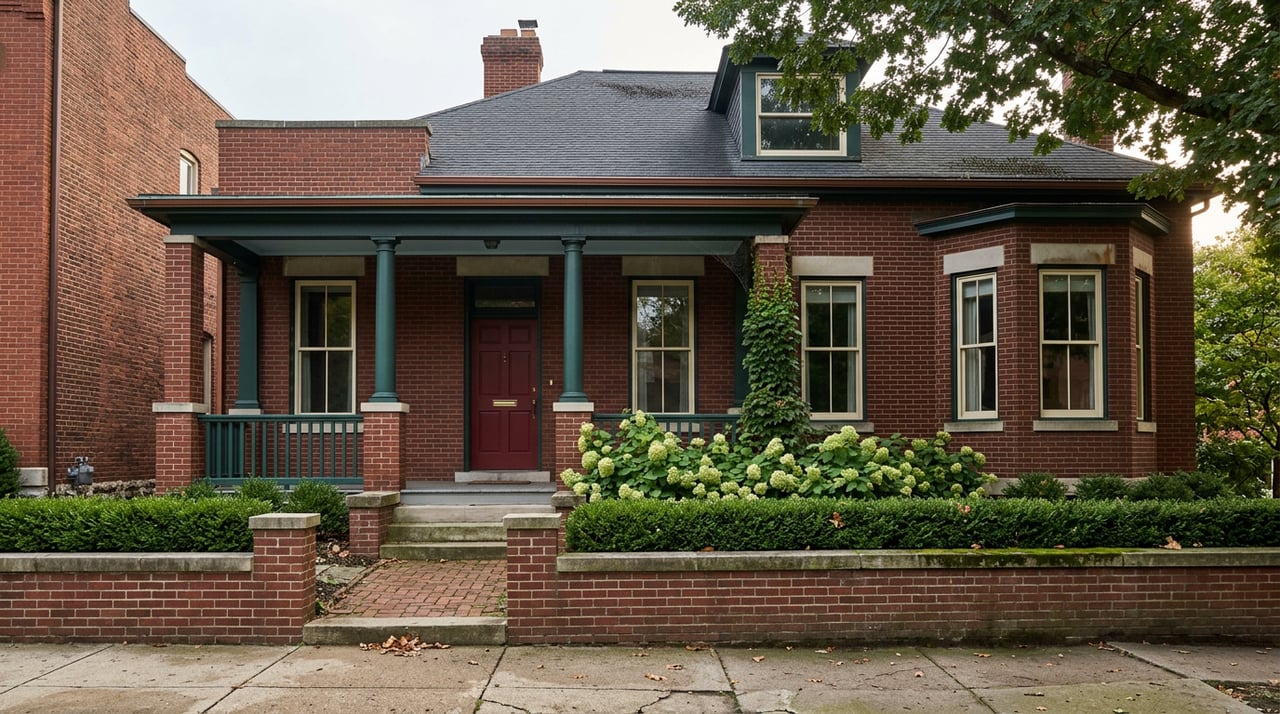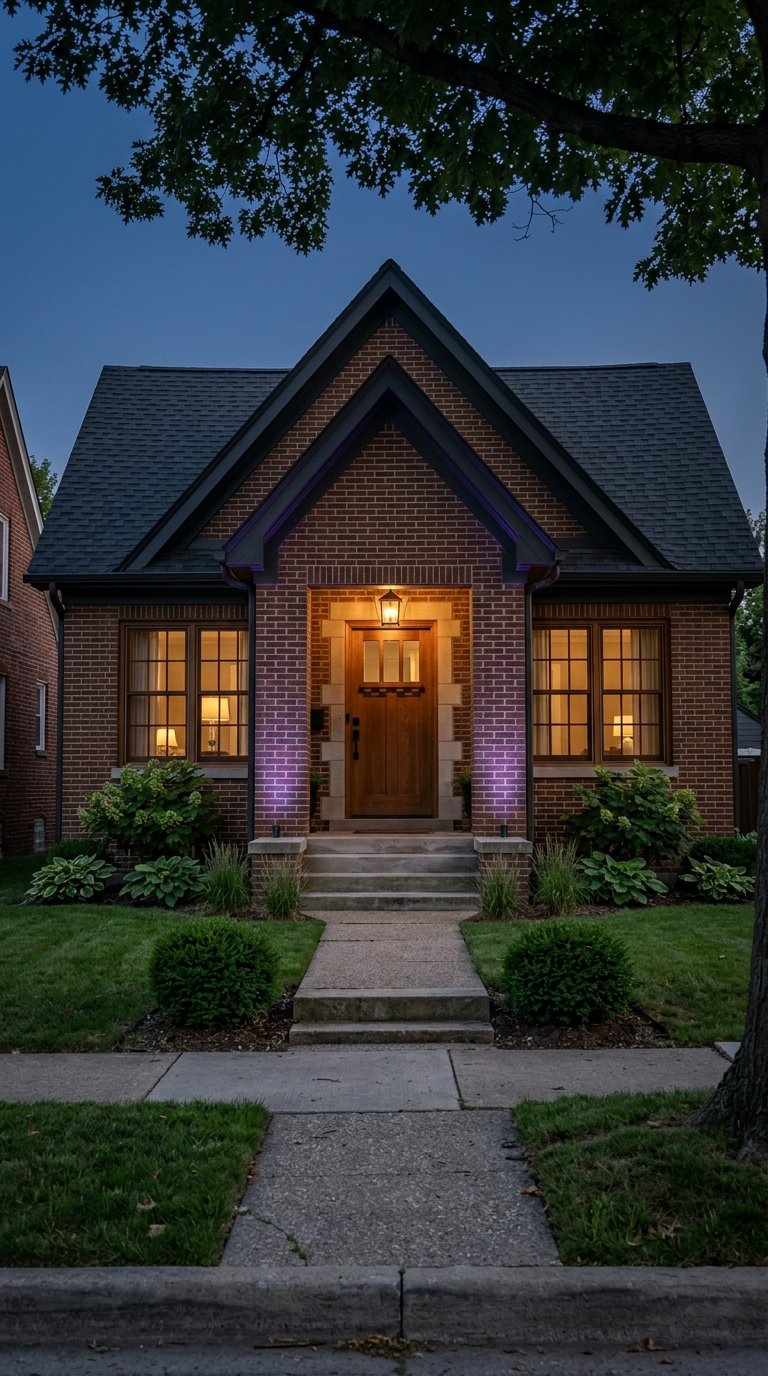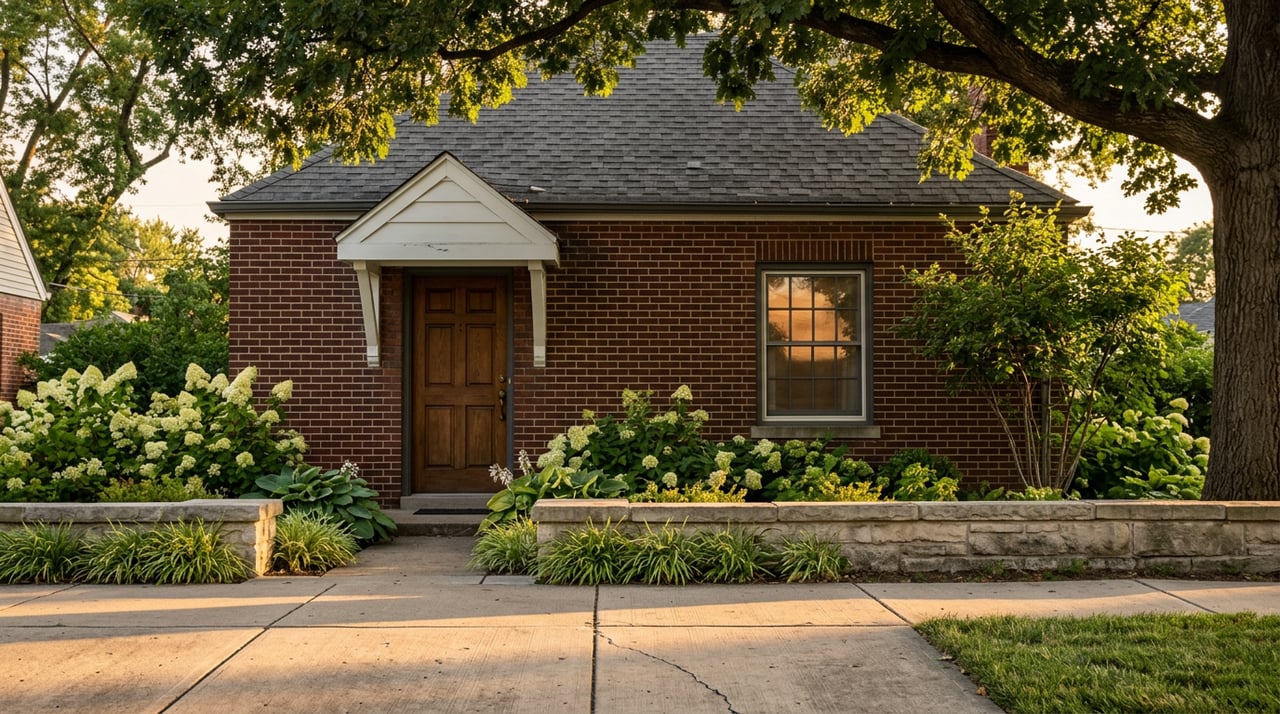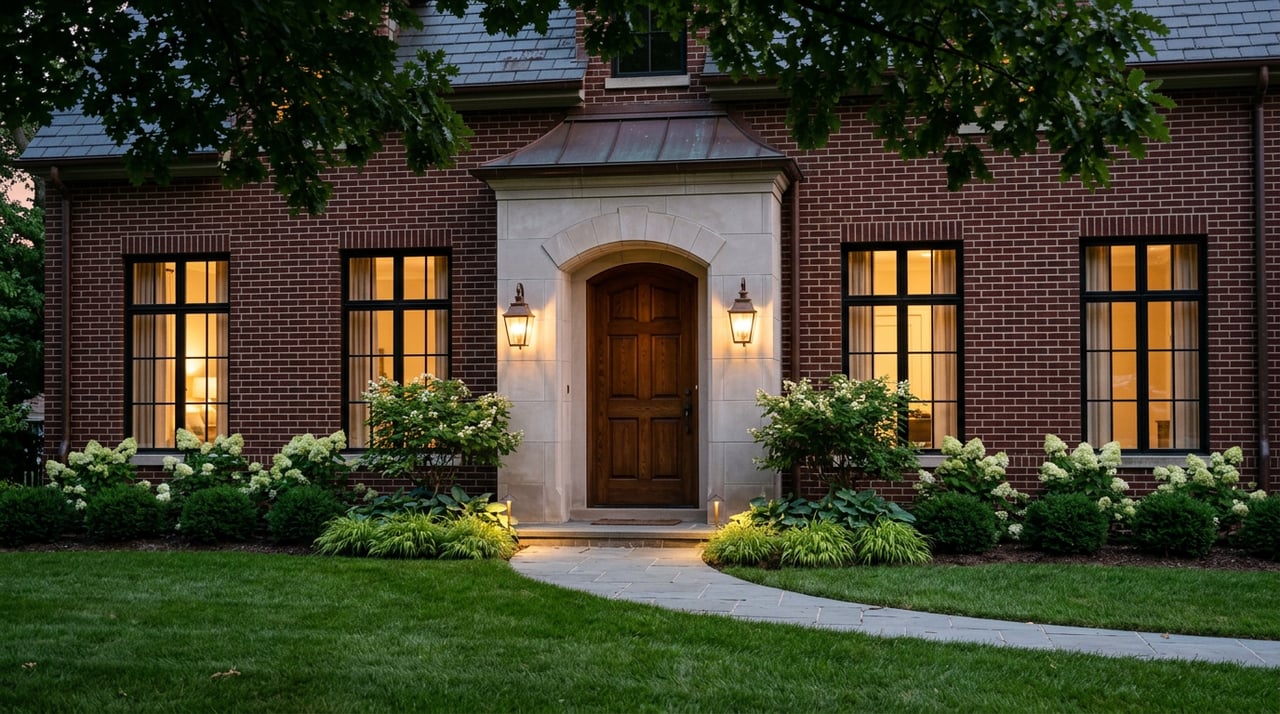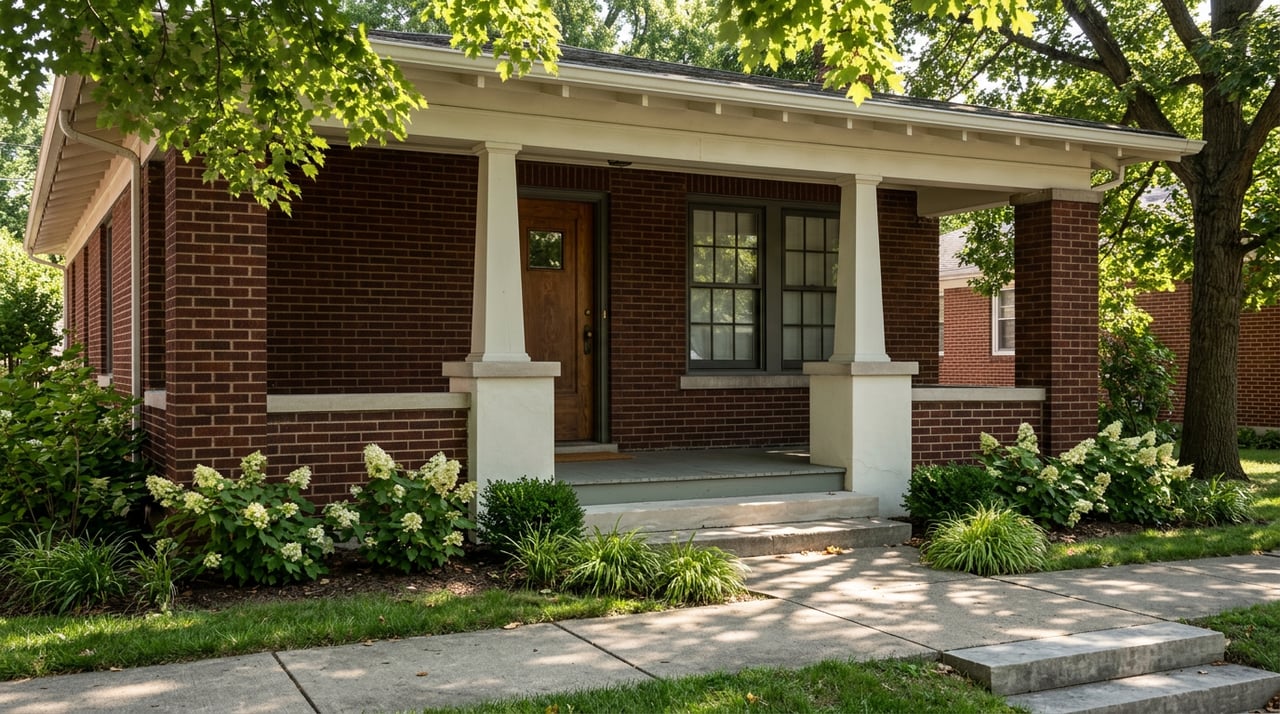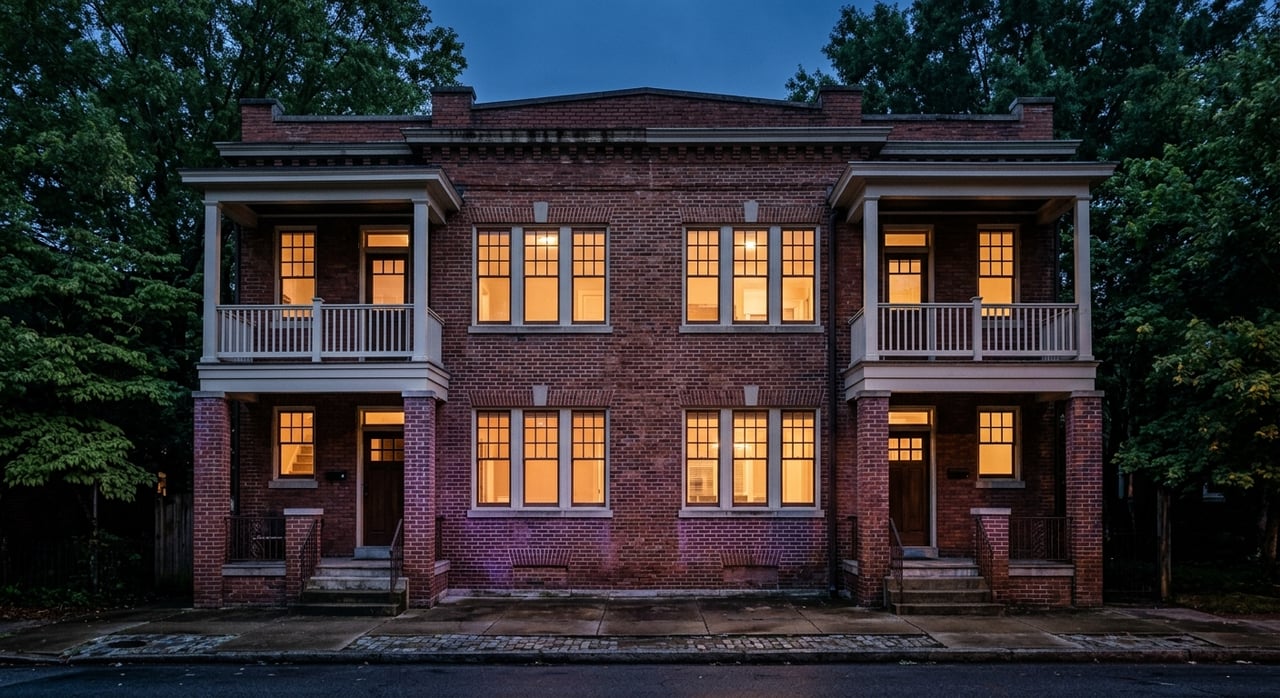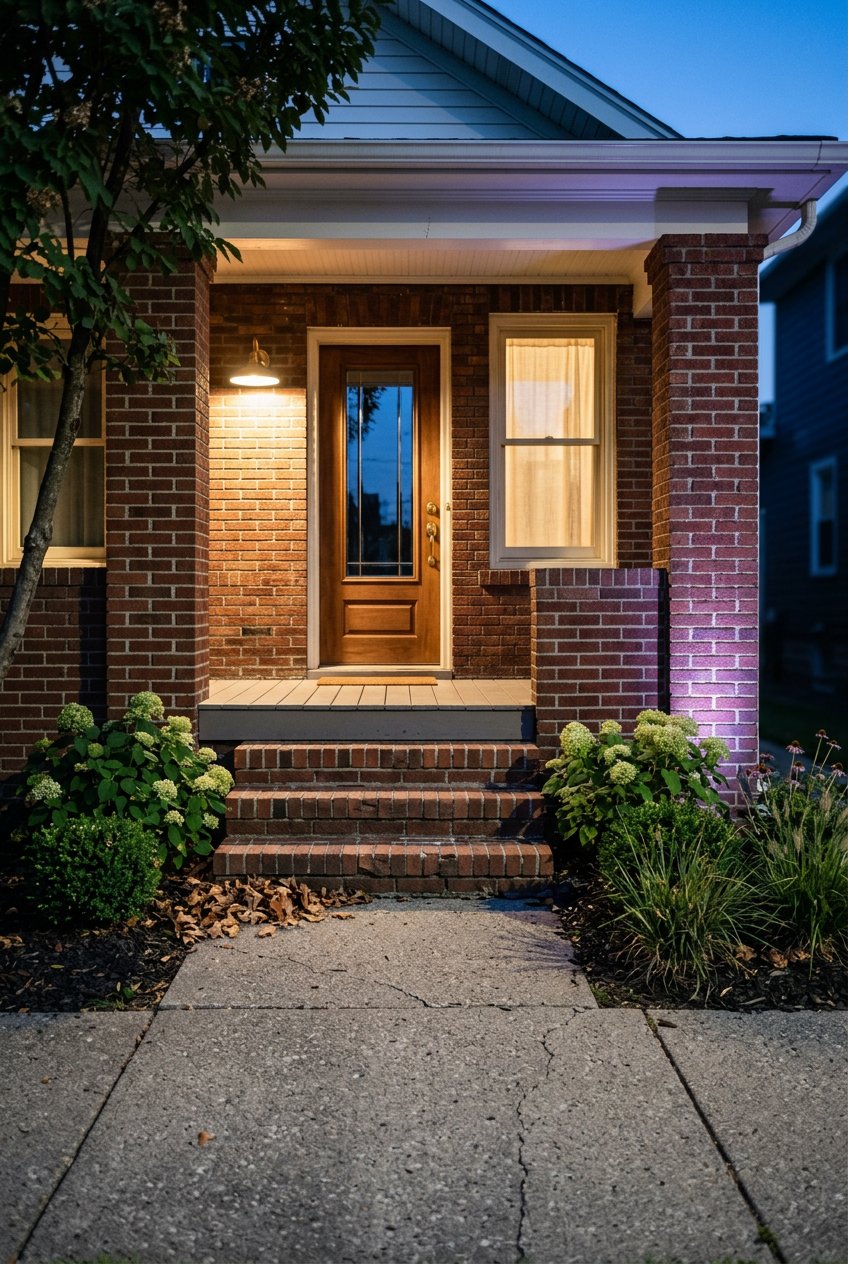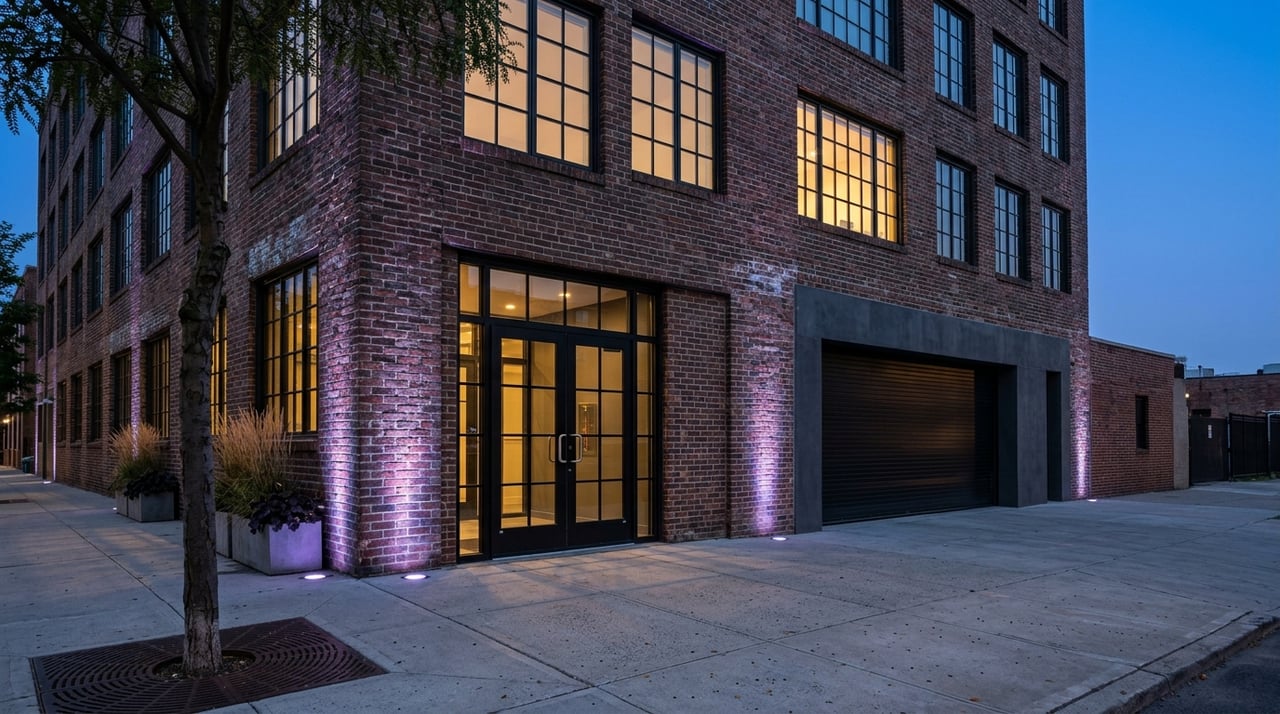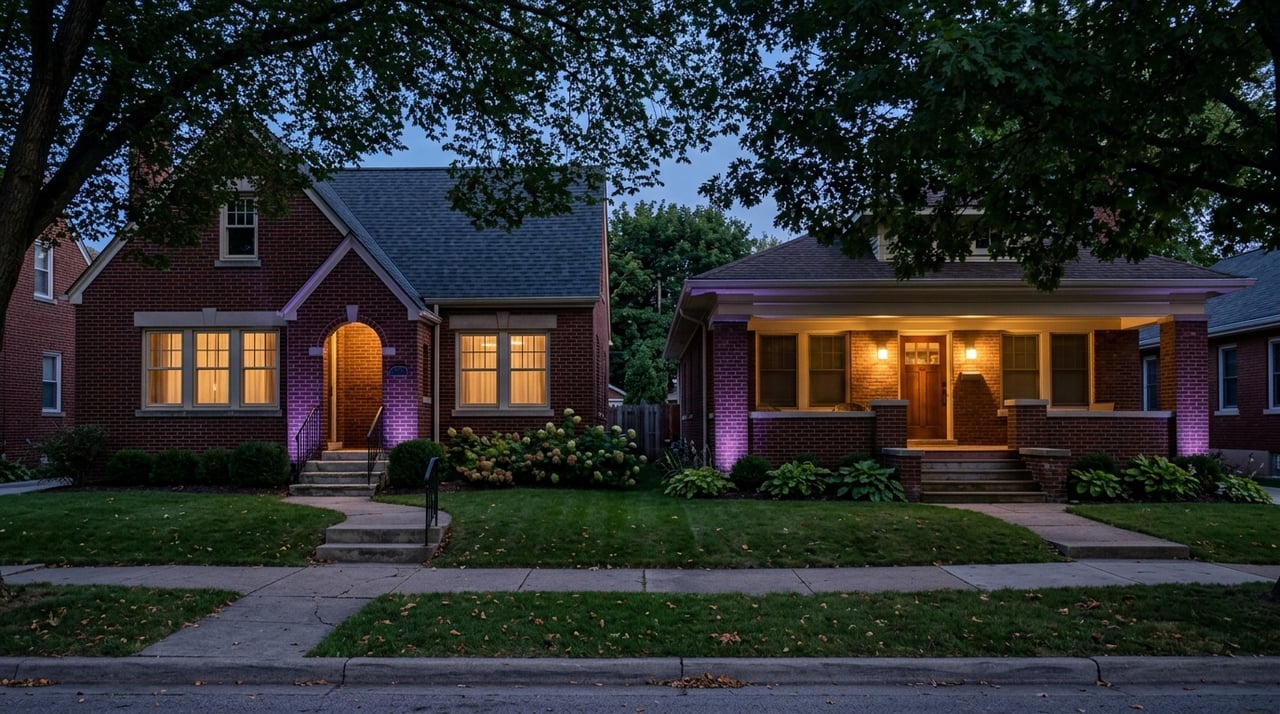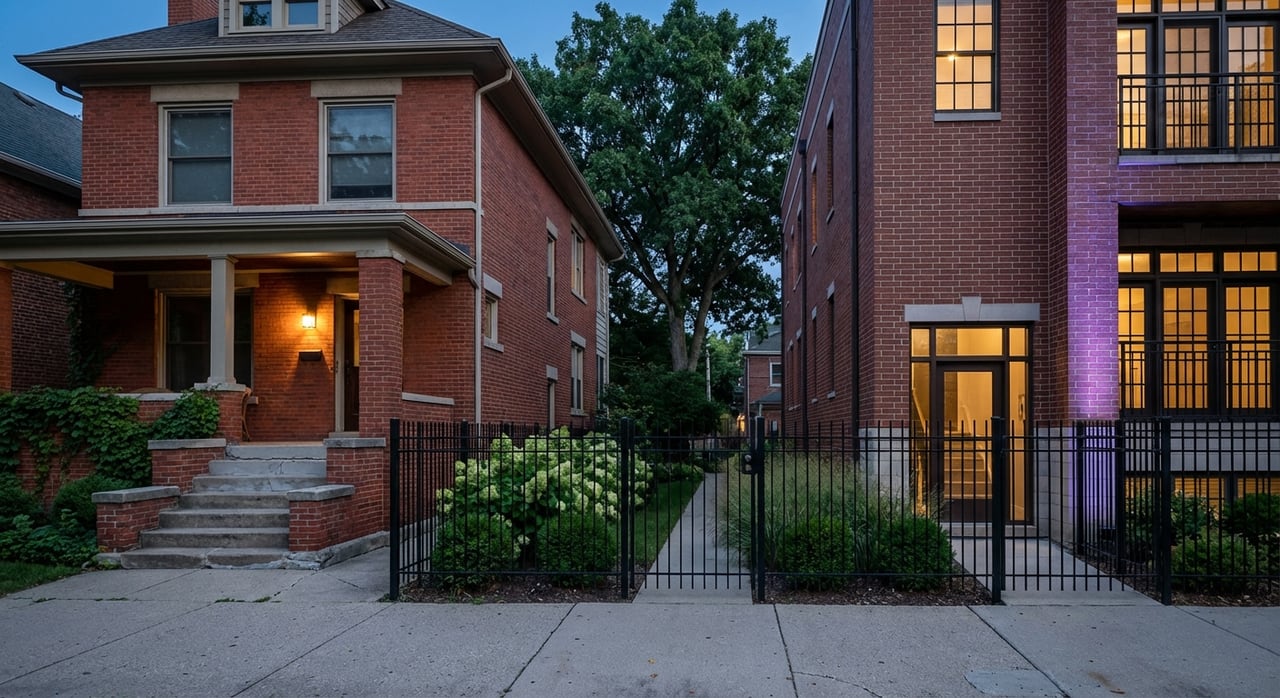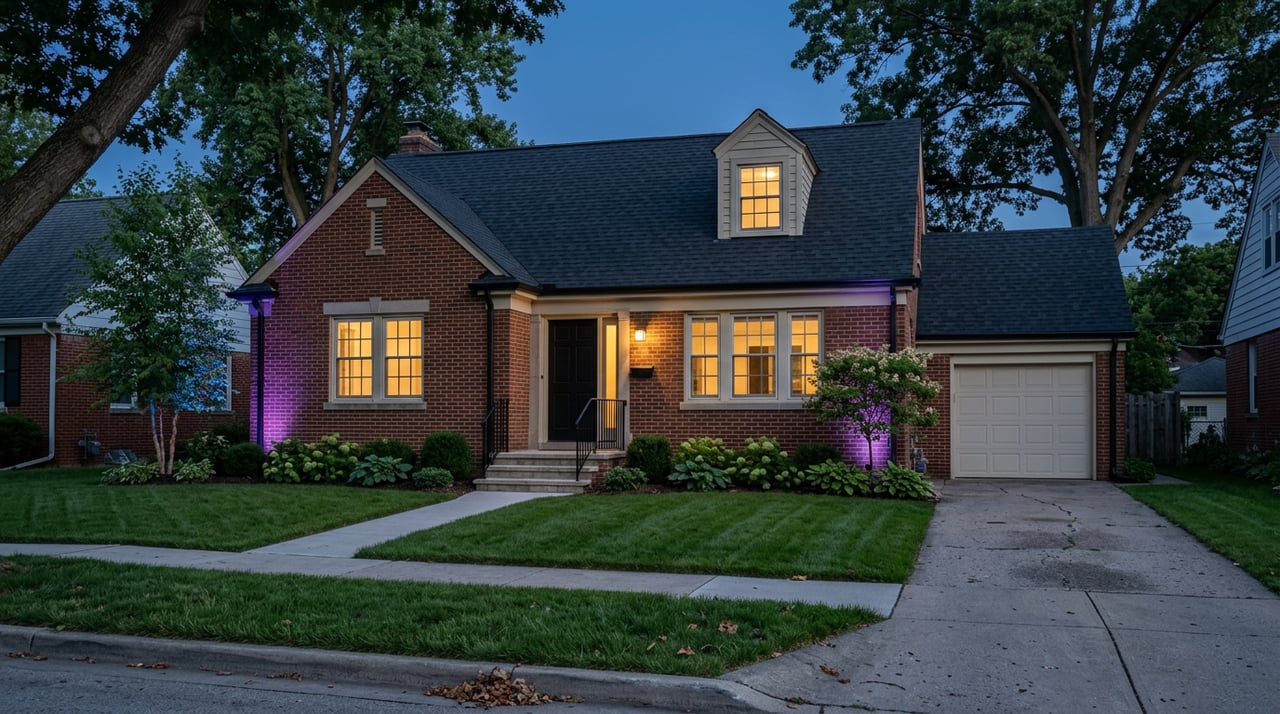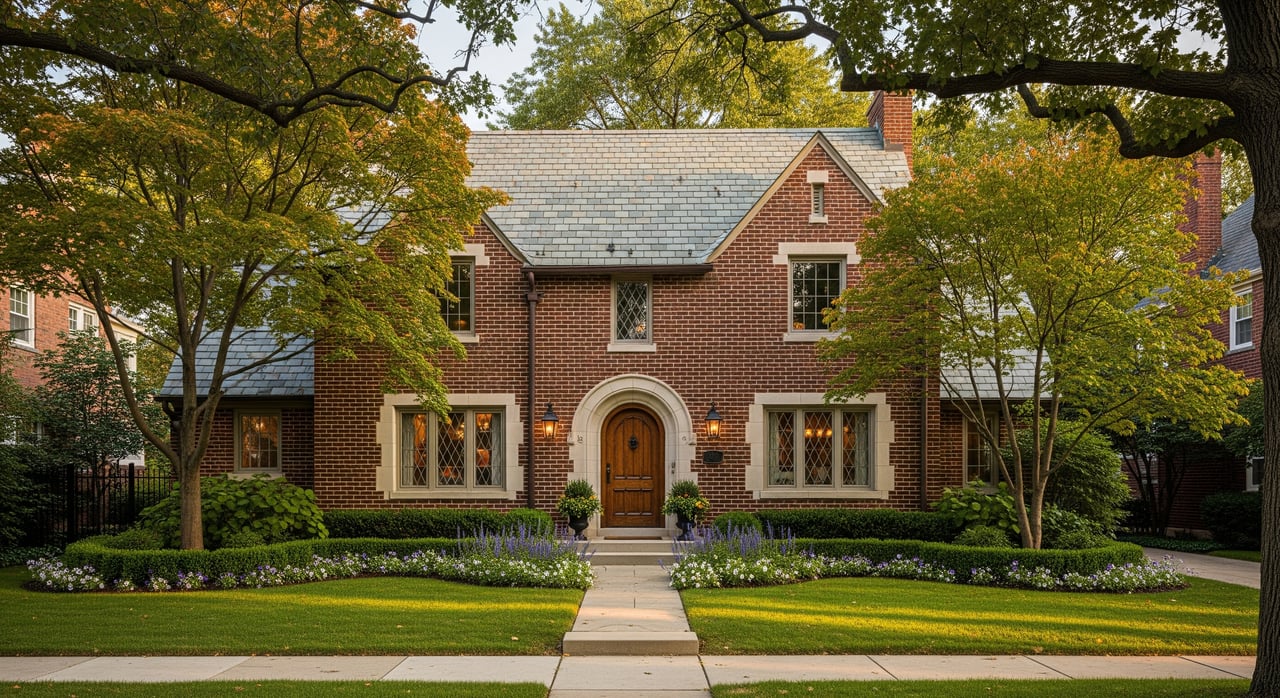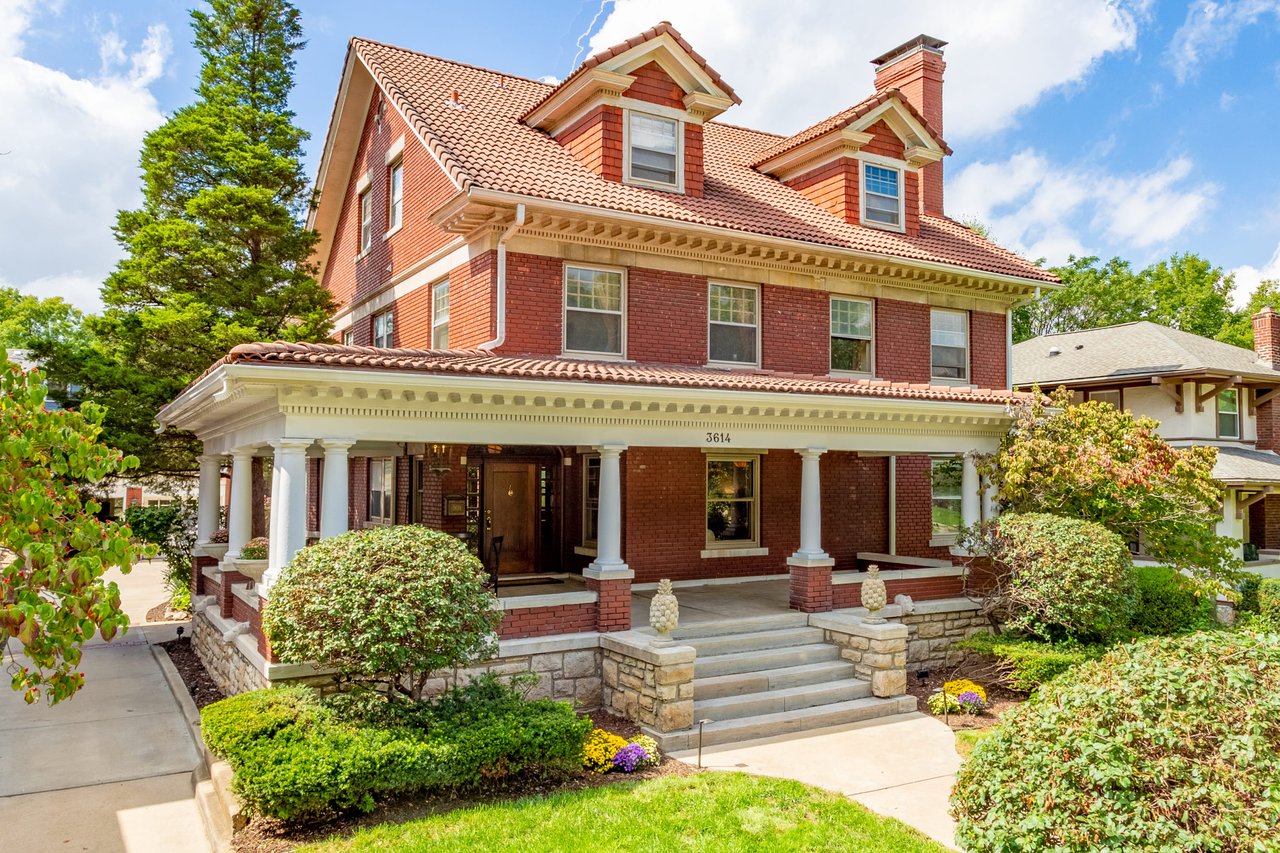
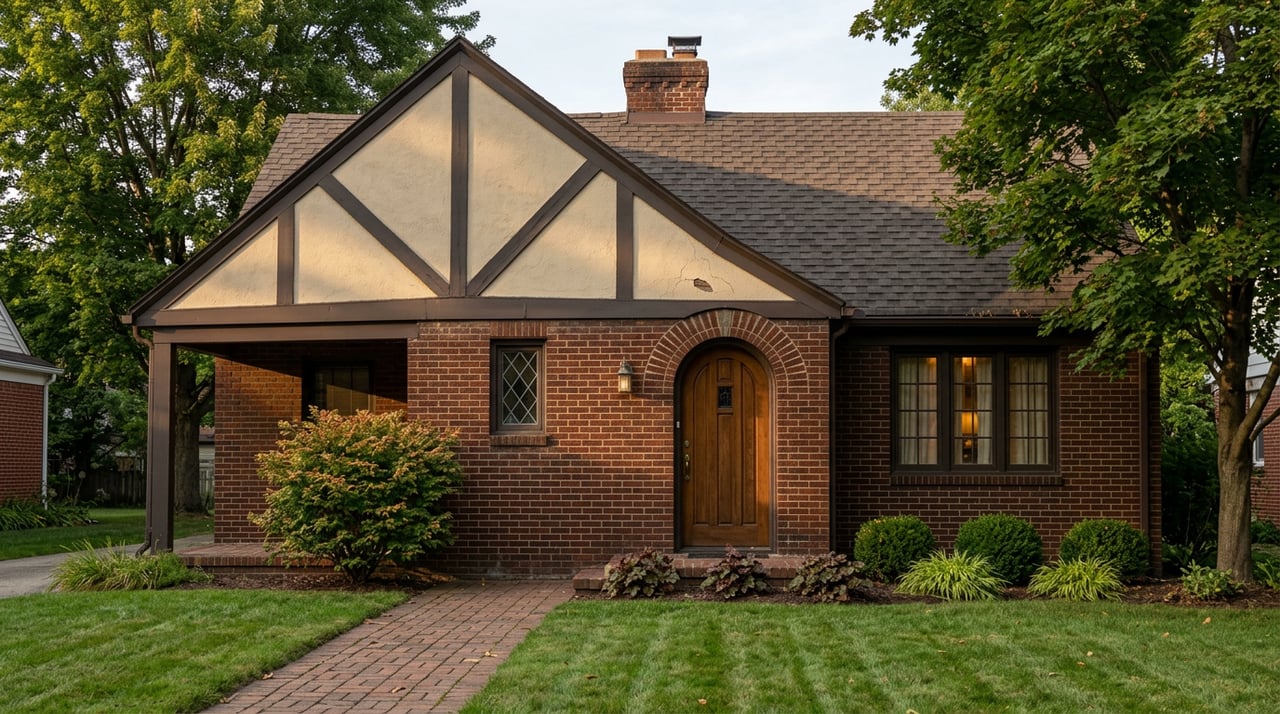
Somewhere between the accepted offer and the closing table, a lot of Brookside sales hit the same snag: the buyer's insurance company asks for a four-point inspection. Roof, plumbing, electrical, HVAC. It's standard practice for any home over 30 years old, and every Craftsman bungalow and Tudor along Brookside Boulevard clears that bar by decades, not years. The listing photos showed refinished floors and a redone kitchen. The four-point letter asks about something nobody photographed: what's actually running through the walls and under the yard.
That gap, between what a Brookside house looks like and what its systems are actually doing, is the real story behind this neighborhood's pricing right now. The headline median moves around more than the neighborhood itself does, because a handful of fully updated homes and a much larger group of original-systems homes get averaged into the same number.
What A 1920s Or 1930s House Is Actually Running
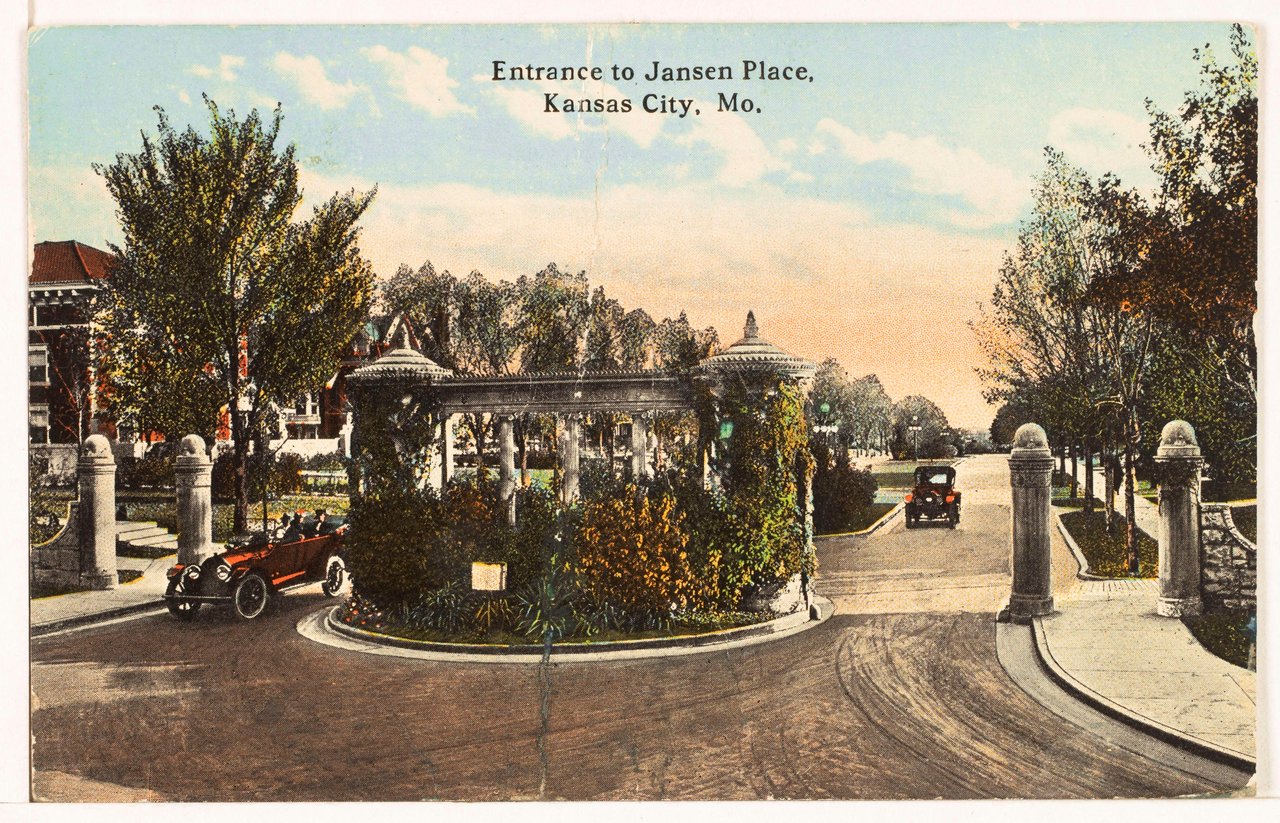
Brookside's housing stock went in mostly during the 1920s and 1930s, Craftsman bungalows and Tudor-style homes built up as part of the Country Club District. Three systems in that stock share a maintenance clock, and inspectors know to check all three the moment they see a build date starting with 19-2 or 19-3.
| System | What was installed | Typical failure window | What shows up at inspection |
|---|---|---|---|
| Sewer lateral | Clay or cast iron pipe | Decades in, brittle, root intrusion at joints | Camera scope shows cracked joints, bellied sections, roots inside the line |
| Water supply | Galvanized steel | Roughly 50 to 70 years before corrosion narrows flow | Rust scale, weak water pressure, corroded fittings |
| Electrical | Knob and tube or cloth-insulated wiring | Often partially replaced, live sections may remain | Insurance flags active knob and tube directly, sometimes as a pass or fail item |
Kansas City's own water utility describes clay as the standard sewer pipe material well into the 1980s, still present under much of the city today. It's brittle, and given enough decades, tree roots find their way into cracked joints, which is why plumbers working in Brookside routinely reach for a camera before quoting anything. Galvanized supply lines follow a similar arc: local plumbers who work these blocks describe a 50 to 70 year window before corrosion narrows the pipe enough to matter, which places most unrenovated Brookside homes squarely inside that window right now. Wiring is the one system insurance treats as binary rather than a spectrum. If any knob and tube is still live, a growing number of carriers simply won't write a new policy until an electrician has replaced it, sometimes requiring a signed repair contract as a condition of coverage.
What Missouri Actually Requires You To Say
Missouri is a caveat emptor state, meaning a seller has no legal duty to go looking for problems, and buyers are expected to inspect before they close. That's the version most sellers hear secondhand. It isn't the complete rule.
The complete rule has two parts. A seller who already knows about a material defect, a foundation repair, a chronic wet basement, a sewer line that failed once already, still has to disclose it if it isn't something a routine inspection would catch on its own. And a licensed agent representing that seller carries a separate statutory duty under Missouri law (RSMo 339.730.1) to disclose adverse material facts they actually know or reasonably should know. That second piece matters more than it sounds. The caveat emptor conversation a seller has with a neighbor is not the same standard their own listing agent has to meet on paper.
For a Brookside seller with an unreplaced sewer lateral or a section of wiring nobody has touched, the practical move isn't hoping the buyer's inspector misses it. It's getting ahead of the finding with a camera scope or electrical evaluation before the home hits the market, so the number attached to the repair is one you can price around rather than one the buyer's inspector hands you during the option period.
The Timeline Insurance Adds That Nobody Budgets For
The four-point inspection isn't unique to Brookside. It's a standard most insurers apply to any home over 30 years old before writing a new policy. For a buyer, that means the mortgage can't close until the insurance binder is finalized, and the binder can't be finalized until the four-point clears or the buyer and seller sort out who pays for whatever it flags.
The homes most likely to snag are the ones that look fine and haven't had a system replaced in decades. A twenty-year-old roof passes without a second look. A sewer lateral nobody has scoped in fifty years does not answer for itself until someone runs a camera through it, which often happens the week before closing, which is the worst possible week to discover a five-figure repair.
What The Median Actually Hides
This is where the neighborhood's own sales data tells the story plainly. A widely used three-month tracker covering sales through May 2026 put the Brookside Park median sale price at $847,000, up 46.8 percent from the same three months a year earlier. That isn't a typo, and it isn't a neighborhood suddenly worth 47 percent more. It's a small sample of recent closings weighted toward fully renovated or newly built homes, the kind where the sewer lateral, the supply lines, and the wiring have already been replaced and priced in.
A broader hyperlocal tracker pulling monthly MLS data for the Brookside area across recent months in 2026 tells a steadier story. Median list prices have run in the $540,000 to $658,000 range, with active listings spanning from the low $200,000s up past $3 million at the same time. In one recent month, the top closed sale reached $2.4 million, $150,000 over its asking price, while the lowest closed sale that same month was $290,000. In one recent May, twelve Brookside homes sold above $1,000,000. The following year's May saw only three.
Read the two numbers together and the mechanism is obvious. Brookside isn't one price. It's a distribution split roughly along a single line: has this house had its sewer lateral, its supply lines, and its wiring addressed, or hasn't it. Fully updated homes cluster at the top of that range and, in a small three-month sample, can swing a reported median by tens of percentage points on their own. Original-systems homes anchor the bottom, and that gap isn't cosmetic condition. It's the three systems nobody photographs.
What This Means If You're Listing Or Under Contract
If you're selling a Brookside home you haven't touched since you bought it, the smartest hour you can spend before listing is a sewer camera scope and a straight answer from an electrician about what's actually in the walls. Either finding gives you a number to work with while you're still setting the price, instead of a number the buyer's inspector hands you mid-contract.
If your home has already had these systems replaced and you have the invoices to prove it, that paperwork is worth more at the table than another coat of paint. It's also worth confirming the past work was pulled under a licensed contractor. Kansas City, Missouri requires its own Residential Building Contractor license through the city's Planning and Development Department, separate from what's required just across the state line in Kansas City, Kansas or Wyandotte County. A previous owner's unpermitted repair can complicate both the disclosure conversation and the insurance underwriting file.
If you're buying, budget for the possibility that the home you love is priced at the top of the range for a reason you can verify, or the bottom of the range for a reason you're about to discover.
FAQ
Does Missouri require a seller to fill out a disclosure form? Missouri doesn't mandate a specific state form, but sellers still have to disclose known material defects that a routine inspection wouldn't catch, and most transactions use a standard seller's disclosure statement anyway.
Will my homeowners insurance company require an inspection because my Brookside home is over 30 years old? Very likely. Most insurers apply a four-point inspection standard covering roof, plumbing, electrical, and HVAC to homes past that age before writing a new policy, and it typically has to clear before your buyer's mortgage can close.
Should I replace an original sewer lateral before listing, or let the buyer negotiate it after inspection? Getting your own camera scope done before listing gives you a number to price around on your own terms. Waiting hands that same number to the buyer's inspector, usually with less time and less leverage to work with.
If you're weighing whether to list your Brookside home this year, or you're already under contract and staring down a four-point letter, the LIVIN KC team can walk through what your home's systems and disclosure file actually look like before you're negotiating from behind. Reach out for a home valuation that accounts for what's behind the walls, not just what the market data shows.